Best Gold Trading Platforms in 2026
Author · Editor
- Author
- Mykola Zavarov
- Editor
- Andriy Bondarenko
Compare gold product types and account conditions. Broker scores are overall assessments, not a ranking of verified XAU/USD trading costs.
- 1FP Markets
Best Gold Trading Platform
- Gold CFDs
- Compare spread, commission and funding
- Check the exact gold contract
VisitTrading CFDs carries high risks. You may lose all invested funds
- 2
- Gold CFDs
- Compare spread, commission and funding
- Check the exact gold contract
VisitTrading CFDs carries high risks. You may lose all invested funds
- 3
- Gold CFDs
- Compare spread, commission and funding
- Check the exact gold contract
Visit81.7% of retail investors lose money when trading CFDs with this broker
- 4
- Spot gold and futures, subject to eligibility
- Compare spread, commission and funding
- Check the exact gold contract
VisitTrading CFDs carries high risks. You may lose all invested funds
- 5
- Gold CFDs
- Compare spread, commission and funding
- Check the exact gold contract
VisitTrading CFDs carries high risks. You may lose all invested funds
- 6
- Gold CFDs
- Compare spread, commission and funding
- Check the exact gold contract
VisitTrading CFDs carries high risks. You may lose all invested funds
- 7
- Gold CFDs
- Compare spread, commission and funding
- Check the exact gold contract
VisitTrading CFDs carries high risks. You may lose all invested funds
- 8
- Gold CFDs
- Compare spread, commission and funding
- Check the exact gold contract
VisitTrading CFDs carries high risks. You may lose all invested funds
- 9
- Gold CFDs
- Compare spread, commission and funding
- Check the exact gold contract
Visit76% of retail investors lose money when trading CFDs with this broker
- 10
- Gold CFDs
- Compare spread, commission and funding
- Check the exact gold contract
Visit68-72% of retail investors lose money when trading CFDs with this broker




- Visit
FP MarketsBest Gold Trading Platform
Gold CFDsCompare spread, commission and fundingCheck the exact gold contractTrading CFDs carries high risks. You may lose all invested funds
- Visit
IC MarketsGold CFDs
Gold CFDsCompare spread, commission and fundingCheck the exact gold contractTrading CFDs carries high risks. You may lose all invested funds
- Visit
PepperstoneGold CFDs
Gold CFDsCompare spread, commission and fundingCheck the exact gold contract81.7% of retail investors lose money when trading CFDs with this broker
- Visit
Interactive BrokersSpot gold and futures, subject to eligibility
Spot gold and futures, subject to eligibilityCompare spread, commission and fundingCheck the exact gold contractTrading CFDs carries high risks. You may lose all invested funds
- Visit
VantageGold CFDs
Gold CFDsCompare spread, commission and fundingCheck the exact gold contractTrading CFDs carries high risks. You may lose all invested funds
- Visit
EightcapGold CFDs
Gold CFDsCompare spread, commission and fundingCheck the exact gold contractTrading CFDs carries high risks. You may lose all invested funds
- Visit
XMGold CFDs
Gold CFDsCompare spread, commission and fundingCheck the exact gold contractTrading CFDs carries high risks. You may lose all invested funds
- Visit
AvaTradeGold CFDs
Gold CFDsCompare spread, commission and fundingCheck the exact gold contractTrading CFDs carries high risks. You may lose all invested funds
- Visit
FxProGold CFDs
Gold CFDsCompare spread, commission and fundingCheck the exact gold contract76% of retail investors lose money when trading CFDs with this broker
- Visit
IGGold CFDs
Gold CFDsCompare spread, commission and fundingCheck the exact gold contract68-72% of retail investors lose money when trading CFDs with this broker
Choosing the best gold trading platform starts with deciding how you want to trade gold. Some brokers specialize in XAU/USD CFDs with flexible position sizes and advanced charting tools. Others provide access to spot metals, exchange-traded gold futures, and ETFs.
FP Markets and IC Markets are strong choices for active gold CFD trading, Pepperstone stands out for its trading platforms, while Interactive Brokers offers broader access to gold markets. Our ranking compares 10 brokers based on trading costs, available instruments, platform functionality, and regulatory oversight.
Top 10 Gold Trading Brokers 2026
1. FP Markets

Before choosing an account
- Contract size, minimum order and margin
- XAU/USD spread, commission and overnight funding
- Trading hours and daily breaks
Availability depends on your country, legal entity and account permissions. Check the instrument on the platform you intend to use.
Source: FP Markets Europe
Leveraged gold products can cause substantial losses. A low spread is not the full trading cost.
2. IC Markets

Before choosing an account
- Contract size, minimum order and margin
- XAU/USD spread, commission and overnight funding
- Trading hours and daily breaks
Availability depends on your country, legal entity and account permissions. Check the instrument on the platform you intend to use.
Source: IC Markets Global
Leveraged gold products can cause substantial losses. A low spread is not the full trading cost.
3. Pepperstone

Before choosing an account
- Contract size, minimum order and margin
- XAU/USD spread, commission and overnight funding
- Trading hours and daily breaks
Availability depends on your country, legal entity and account permissions. Check the instrument on the platform you intend to use.
Leveraged gold products can cause substantial losses. A low spread is not the full trading cost.
4. Interactive Brokers

- US Spot Gold (USGOLD)
- Eligible US residents only, with state restrictions. Check commission and custody charges.
- COMEX Gold futures
- Check contract size, margin, expiry and close-out or delivery rules.
Availability depends on your country, legal entity and account permissions. Check the instrument on the platform you intend to use.
Leveraged gold products can cause substantial losses. A low spread is not the full trading cost.
5. Vantage

Before choosing an account
- Contract size, minimum order and margin
- XAU/USD spread, commission and overnight funding
- Trading hours and daily breaks
Availability depends on your country, legal entity and account permissions. Check the instrument on the platform you intend to use.
Source: Vantage international website
Leveraged gold products can cause substantial losses. A low spread is not the full trading cost.
6. Eightcap

Before choosing an account
- Contract size, minimum order and margin
- XAU/USD spread, commission and overnight funding
- Trading hours and daily breaks
Availability depends on your country, legal entity and account permissions. Check the instrument on the platform you intend to use.
Source: Eightcap Australia
Leveraged gold products can cause substantial losses. A low spread is not the full trading cost.
7. XM

Before choosing an account
- Contract size, minimum order and margin
- XAU/USD spread, commission and overnight funding
- Trading hours and daily breaks
Availability depends on your country, legal entity and account permissions. Check the instrument on the platform you intend to use.
Leveraged gold products can cause substantial losses. A low spread is not the full trading cost.
8. AvaTrade
Before choosing an account
- Contract size, minimum order and margin
- XAU/USD spread, commission and overnight funding
- Trading hours and daily breaks
Availability depends on your country, legal entity and account permissions. Check the instrument on the platform you intend to use.
Leveraged gold products can cause substantial losses. A low spread is not the full trading cost.
9. FxPro
Before choosing an account
- Contract size, minimum order and margin
- XAU/USD spread, commission and overnight funding
- Trading hours and daily breaks
Availability depends on your country, legal entity and account permissions. Check the instrument on the platform you intend to use.
Leveraged gold products can cause substantial losses. A low spread is not the full trading cost.
10. IG

Before choosing an account
- Contract size, minimum order and margin
- XAU/USD spread, commission and overnight funding
- Trading hours and daily breaks
Availability depends on your country, legal entity and account permissions. Check the instrument on the platform you intend to use.
Source: IG Switzerland
Leveraged gold products can cause substantial losses. A low spread is not the full trading cost.
Comparison of the Best Gold Trading Platforms
The best platform for trading gold depends on the instrument you want to trade. Although most Forex brokers offer gold CFDs, their available platforms, account types, and execution conditions can differ significantly.
Interactive Brokers is a particularly interesting alternative because it provides access to exchange-traded gold futures and ETFs, alongside spot gold products for eligible clients.
The following table highlights the main differences between our selected gold trading brokers.
Broker | Gold Trading Instruments | Trading Platforms | Best For |
|---|---|---|---|
Gold CFDs | MT4, MT5, cTrader, TradingView | Overall gold CFD trading | |
Gold CFDs | MT4, MT5, cTrader, TradingView | Active trading and scalping | |
Spot gold CFDs and other gold-linked CFDs | MT4, MT5, cTrader, TradingView | Advanced trading platforms | |
Spot gold, gold futures, ETFs | Trader Workstation, IBKR Mobile | Futures and multi-asset investing | |
Gold CFDs | MT4, MT5, TradingView, WebTrader | Flexible trading strategies | |
Gold CFDs | MT4, MT5, TradingView | TradingView users | |
Gold CFDs | MT4, MT5, WebTrader | Beginners | |
Gold CFDs | MT4, MT5, WebTrader, AvaTrade App | Education and accessible platforms | |
Spot gold and futures-based CFDs | MT4, MT5, cTrader, FxPro Edge | Multi-platform trading | |
Spot gold and gold futures CFDs | IG Trading Platform, MT4 | Gold market variety |
Instrument and platform availability depends on the broker's legal entity, account type, and your country of residence. CFDs referencing futures prices are not the same as exchange-traded futures contracts.
Compare Gold Trading Brokers Side by Side
Before opening an account, compare the brokers' regulation, minimum deposits, supported markets, and trading platforms. A broker with attractive gold trading conditions may have higher costs or fewer features in other areas.
Only matching known values are hidden. Rows with incomplete data stay visible.
Swipe the table left or right to view all data.
Showing 8 of 8 parametersShowing 8 of 8 parameters
| Broker |  FP Markets |  IC Markets |  Pepperstone |
|---|---|---|---|
| Rating | 4.7/5 | 4.7/5 | 4.6/5 |
| Foundation Year | 2005 | 2007 | 2010 |
| Regulated in Countries | Australia, Cyprus, South Africa, Saint Vincent and the Grenadines, Seychelles | Seychelles, Australia, Cyprus, Kenya | Australia, Bahamas, Cyprus, United Arab Emirates, Germany, Kenya, United Kingdom |
| Regulators | |||
| Minimum Deposit |
|
|
|
| Trading Accounts |
|
|
|
| Trading Assets (CFDs) |
|
|
|
| Trading Platforms |
|
|
|
| Review | |||
| Broker Comparison | |||
| Register | RegisterTrading CFDs carries high risks. You may lose all invested funds | RegisterTrading CFDs carries high risks. You may lose all invested funds | Register81.7% of retail investors lose money when trading CFDs with this broker |
XAU/USD Spreads and Gold Trading Fees Compared
Trading costs are among the most important factors when choosing a gold broker. Even a small difference in the XAU/USD spread can become significant when trading larger positions or placing multiple orders throughout the day.
The main costs of gold CFD trading include:
- Spread. The difference between the buying (Ask) and selling (Bid) prices. It is usually expressed in USD per troy ounce or in broker-defined points or pips.
- Trading commission. Some brokers charge an additional fee for opening and closing positions, particularly on Raw or commission-based accounts.
- Overnight swap. A financing charge or credit that may apply when a gold CFD position remains open beyond the broker's rollover time.
- Slippage. The difference between the requested and executed price, which can increase during volatile trading periods.
A low advertised spread does not necessarily mean that a broker has the lowest total trading costs. For example, an account with a narrow spread and a separate commission may be more expensive than a commission-free account with a slightly wider spread.
Compare Live Gold Spreads
Instead of relying only on advertised minimum spreads, traders can examine actual broker quotes.
Our Live Forex Spreads comparison includes XAU/USD alongside major currency pairs. It allows traders to compare gold spreads across monitored live MT5 accounts, including current quotes, historical averages, typical spreads, and wider-spread conditions.
For XAU/USD, the comparison currently shows spread costs separately because gold-specific commissions have not yet been verified for the monitored accounts. Therefore, the lowest displayed gold spread should not automatically be interpreted as the lowest all-in trading cost.
Check the data timestamp and account type before comparing brokers. Spreads can change considerably around major economic announcements, periods of reduced liquidity, and daily market breaks.
How Much Does It Cost to Trade Gold?
Consider a hypothetical XAU/USD CFD with the following conditions:
- Bid price: $4,000.00
- Ask price: $4,000.20
- Spread: $0.20 per ounce
- Contract size: 100 troy ounces per lot
- Trade size: 1 lot
The quoted spread cost is:
$0.20 × 100 ounces = $20
Opening and immediately closing a one-lot position at these prices would therefore result in approximately $20 of spread cost, before any separately charged commission or slippage.
On a 0.1-lot position with the same contract specification, the spread cost would be $2.
This example illustrates why gold contract sizes matter. Not every broker or product uses the same contract specification, and the quoted prices are illustrative rather than live market prices.
To calculate the potential profit or loss of a gold CFD position, use our Gold Profit Calculator. You can enter the trade direction, entry and exit prices, volume, contract size, commission, and swap charges to estimate your net trading result.
The calculator is designed for linear XAU/USD CFDs. Exchange-traded gold futures and other spot metal products require their own contract specifications and cost calculations.
Which Gold Trading Platform Is Best for Your Trading Style?
Different trading strategies place different demands on a broker. A platform designed for short-term gold scalping may not be the best choice for someone investing in gold ETFs or trading futures over several weeks.
Trading Style | Brokers to Consider | What Matters Most |
|---|---|---|
Gold scalping | Spreads, commissions, execution and slippage | |
Algorithmic trading | Expert Advisors, strategy testing and VPS support | |
TradingView trading | Charting tools and broker integration | |
Beginners | Demo accounts, education and manageable position sizes | |
Multi-asset investing | ETFs, futures, spot metal access and portfolio tools | |
Gold market research | Market analysis, charting and instrument choice | |
Multi-platform CFD trading | Choice of terminals and trading conditions |
For active XAU/USD traders, the starting point should be the full transaction cost and the broker's execution conditions during the sessions they normally trade.
For beginners, a demo account, understandable trading interface, and sensible position-sizing options may be more valuable than the smallest advertised spread.
For investors, Interactive Brokers offers access to gold-related ETFs and exchange-traded futures, providing alternatives to the leveraged CFDs commonly available through Forex brokers.
There is no universally best gold trading platform. The right choice depends on the instrument, trading frequency, holding period, account size, and local regulations.
How We Selected the Best Gold Trading Platforms
Our selection of gold trading brokers considers their overall reliability and trading services, with additional attention to features that matter specifically when trading gold.
The following criteria are particularly important:
- Gold market access. We prioritize brokers that provide access to XAU/USD or other relevant gold instruments, such as futures and ETFs. We distinguish direct exchange-traded products from CFDs.
- Trading costs. We consider published spreads, commissions, overnight financing, and the transparency of each broker's pricing structure. Where comparable verified gold-specific data is unavailable, we do not assume a broker has the lowest all-in cost.
- Regulation and reliability. We examine the broker's legal entities, regulatory oversight, operating history, and applicable client protections.
- Trading platforms. We assess the availability of MetaTrader 4, MetaTrader 5, cTrader, TradingView, proprietary platforms, and tools for technical analysis or automated trading.
- Trading conditions and accessibility. We consider minimum deposits, contract sizes, available order types, account options, and restrictions affecting traders in different jurisdictions.
Our broader broker assessments follow the IamForexTrader broker rating methodology, which evaluates regulation, commissions, trading platforms, market coverage, customer support, and other important factors.
The ranking is intended to help traders identify suitable brokers rather than suggest that every broker offers the same gold instruments or trading conditions.
How to Choose the Best Gold Broker
Choosing a gold broker involves more than finding an attractive trading platform. Before depositing money, check the exact instrument, its contract specifications, the total cost of trading, and the protections available under your account agreement.
1. Check XAU/USD Spreads and Commissions
For frequent gold traders, transaction costs can have a major impact on trading results.
Compare the typical spread rather than relying exclusively on promotional minimums. Some brokers advertise spreads starting from zero, but those conditions may occur only briefly and may be accompanied by additional commissions.
It is also important to compare equivalent accounts. A Raw account at one broker should not be compared against a Standard account at another without accounting for the different pricing structures.
For traders who hold positions overnight, swap charges may be just as important as the opening spread. Long and short positions can have different financing conditions, and rates may change.
2. Verify Regulation and Client Protection
A reliable gold broker should provide clear information about the legal entity responsible for your trading account and the regulator supervising that entity.
Regulators such as the UK's Financial Conduct Authority (FCA), the Australian Securities and Investments Commission (ASIC), and the Cyprus Securities and Exchange Commission (CySEC) oversee financial firms operating under their respective frameworks.
However, a broker may operate through several entities with different trading restrictions, leverage limits, compensation arrangements, and client protections.
Always verify the license of the specific entity serving your country. Regulation reduces certain risks but does not protect traders against ordinary market losses.
3. Consider Leverage, Margin and Contract Sizes
Gold is a volatile instrument, and leverage can magnify the effect of relatively small price movements.
For example, a gold CFD representing 100 troy ounces changes in gross value by $100 for every $1 change in the gold price.
If the market moves $20 against that position, the resulting gross loss would be $2,000, excluding trading costs.
Using higher leverage reduces the initial margin required to open the same position, but it does not reduce the position's market exposure or potential loss.
Check the minimum trade size, contract size, margin requirements, and stop-out policy before opening an account. A small minimum deposit does not necessarily mean that a particular gold position is affordable or appropriate.
4. Evaluate Trading Platforms and Execution
The best gold trading software should provide reliable order management, suitable charting tools, and access to the markets required by your strategy.
For manual traders, important features include customizable charts, price alerts, pending orders, and easy-to-use stop-loss and take-profit controls.
Algorithmic traders may need Expert Advisors, historical data, strategy testing, or VPS support.
Execution quality also matters. Gold can experience rapid price movements following US inflation reports, Federal Reserve announcements, and unexpected geopolitical developments.
During these periods, spreads may widen and orders may execute at prices different from those requested. Test your strategy under realistic conditions rather than relying only on a broker's advertised execution speed.
MT4 vs MT5 vs cTrader vs TradingView: Which Is Best for Gold?
MetaTrader 4, MetaTrader 5, cTrader, and TradingView are among the most widely used platforms for analyzing and trading XAU/USD CFDs.
However, they differ in their interfaces, automation capabilities, and supported markets.
Platform | Main Advantages | Suitable For |
|---|---|---|
MetaTrader 4 (MT4) | Established Expert Advisor ecosystem, custom indicators, straightforward interface | Forex and gold CFD traders using existing MT4 strategies |
MetaTrader 5 (MT5) | More built-in analytical tools, additional order functionality, multi-asset support | Manual and algorithmic traders |
cTrader | Advanced charting, order-management tools and algorithmic trading support | Active traders and scalpers |
TradingView | Browser-based charts, technical indicators, alerts and Pine Script | Technical analysts and chart-focused traders |
Trader Workstation (TWS) | Extensive order tools and access to exchange-traded products | Interactive Brokers clients trading gold futures, ETFs and eligible spot metals |
MetaTrader 4 (MT4)

MetaTrader 4 remains a popular choice for XAU/USD trading thanks to its familiar interface, extensive library of custom indicators, and support for Expert Advisors.
It is especially suitable for traders who already use automated strategies developed for MT4. However, the platform has fewer built-in analytical features than MetaTrader 5.
If you prefer this terminal, explore our selection of the best MetaTrader 4 brokers to compare supported brokers and their trading conditions.
MetaTrader 5 (MT5)
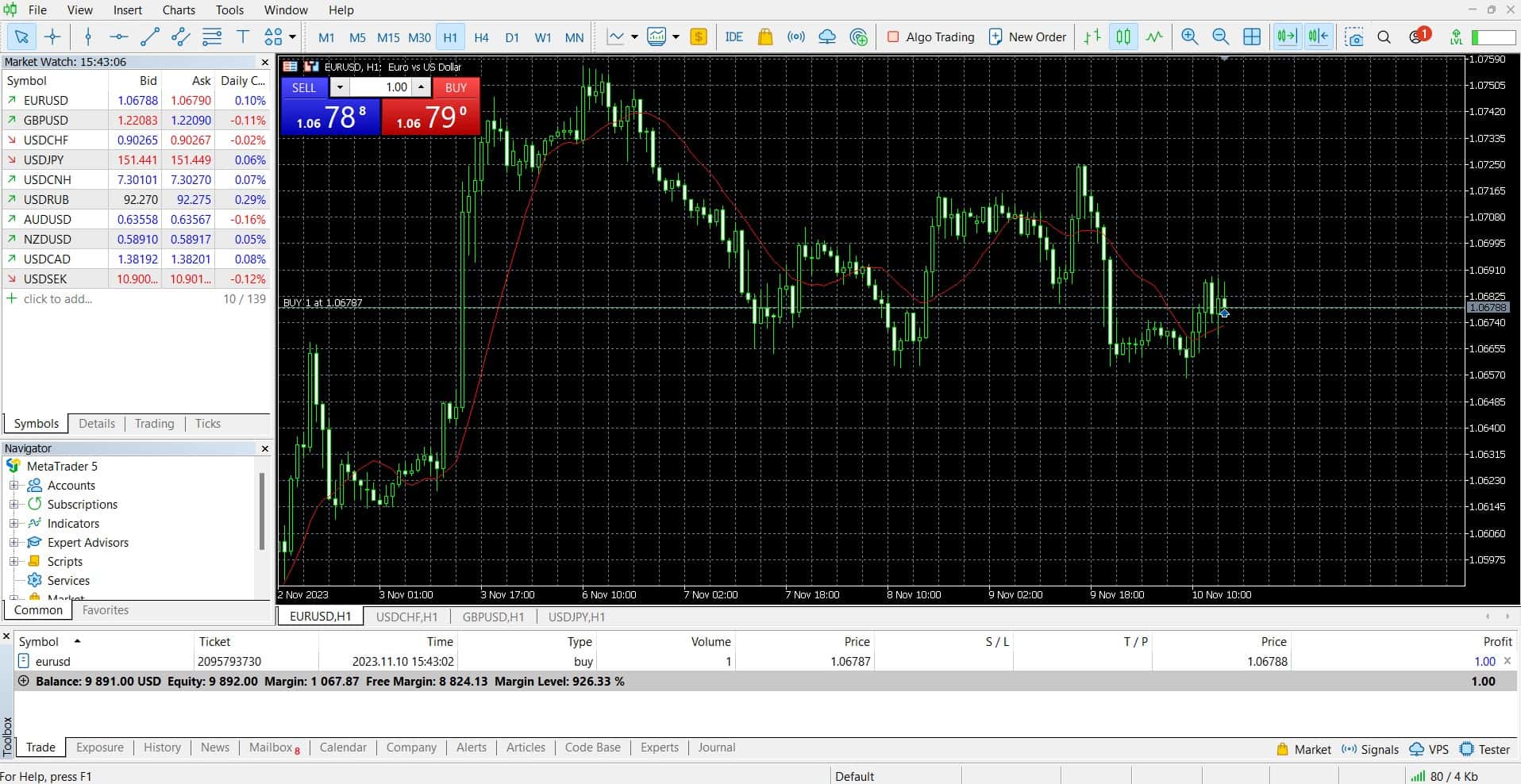
MetaTrader 5 provides more built-in technical indicators, additional timeframes, advanced order management, and improved strategy-testing capabilities compared with MT4.
Its multi-asset architecture also makes it suitable for traders who want to analyze gold alongside currencies, indices, and other financial instruments.
Our ranking of the best MetaTrader 5 brokers can help you find brokers offering MT5 and compare their available trading services.
cTrader

cTrader is designed for traders who value advanced charting, detailed order-management tools, and a modern trading interface.
The platform supports algorithmic trading through cTrader Algo and provides features useful for developing and testing automated strategies.
It can be particularly attractive to active XAU/USD traders, although execution quality, spreads, and available order types ultimately depend on the broker.
See our comparison of the best cTrader brokers to explore providers that support this platform.
TradingView
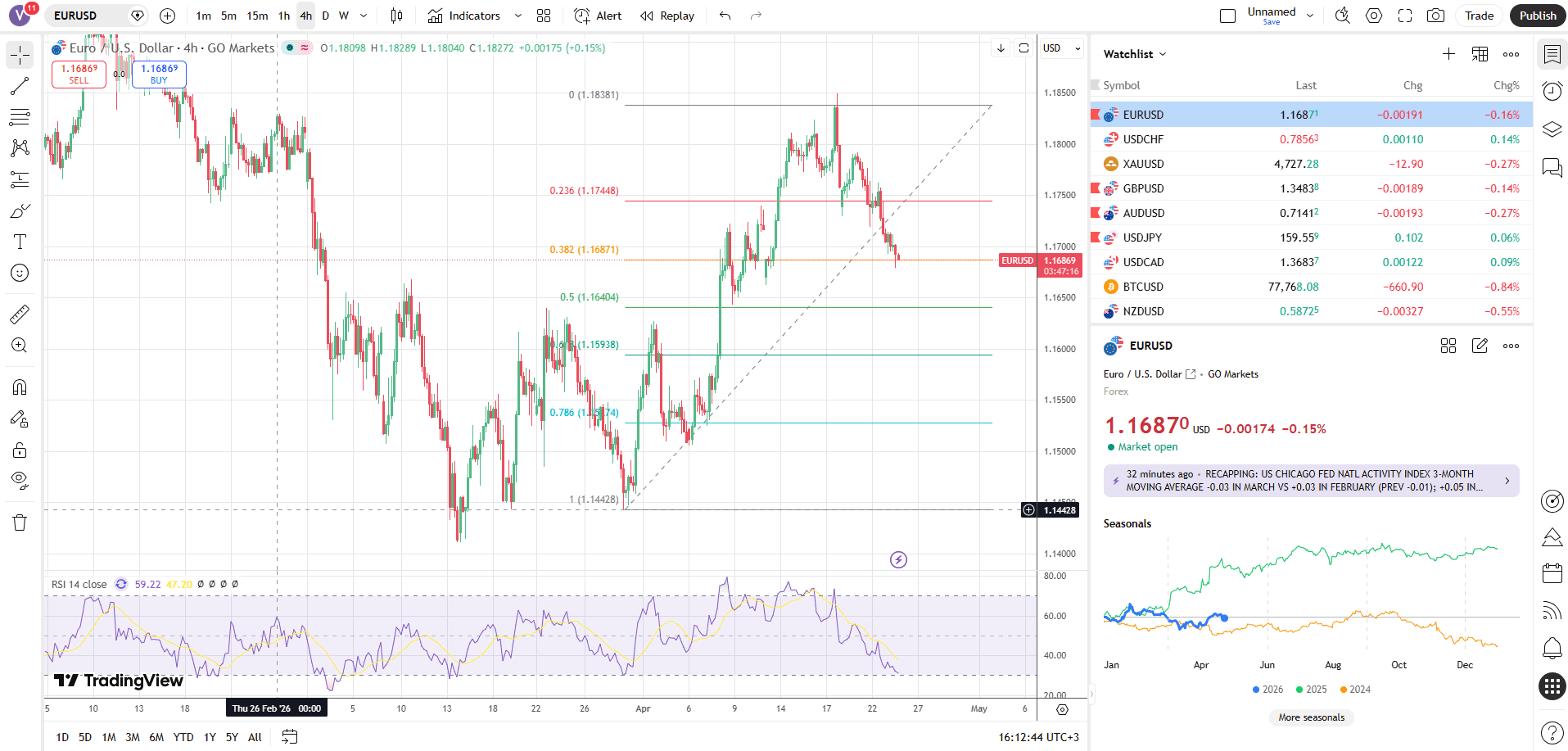
TradingView is especially popular among technical analysts because of its advanced charts, extensive indicator library, drawing tools, customizable alerts, and Pine Script functionality.
It is well suited to analyzing XAU/USD price movements across multiple timeframes and testing indicator-based strategies.
However, not every TradingView-compatible broker supports direct gold trading through the platform. Available instruments and trading features depend on the broker's integration.
To compare compatible providers, visit our ranking of the best TradingView brokers.
Is MT4 or MT5 Better for Gold Trading?
MetaTrader 4 remains useful for traders who already rely on MT4 Expert Advisors and custom indicators.
MetaTrader 5 offers a broader set of built-in analysis and testing tools, making it an attractive choice for traders developing new strategies.
However, an MT5 account does not automatically offer better gold prices or execution than an MT4 account. These conditions depend on the broker, account type, liquidity, and trading infrastructure.
Similarly, TradingView can be excellent for analysis, but the ability to place gold trades directly from its charts depends on the broker integration and supported instruments.
Gold CFDs vs Spot Gold vs Futures vs ETFs
Not every gold trading platform provides access to the same type of investment.
Some brokers allow traders to speculate on price changes through CFDs, while others offer spot metal products, exchange-listed futures, or gold-backed exchange-traded funds.
Understanding the difference is essential because the contracts have different costs, risks, and ownership arrangements.
Gold Instrument | How It Works | Key Considerations |
|---|---|---|
Gold CFDs | Speculate on gold price movements through a broker contract without owning the metal | Spreads, leverage, overnight financing |
Spot Gold | Buy or sell gold through an applicable spot metal arrangement | Settlement, commissions, custody and product-specific rights |
Gold Futures | Trade standardized exchange contracts linked to gold prices | Contract size, expiry, margin, exchange and broker fees |
Gold ETFs | Buy shares of a fund offering gold exposure | Fund expenses, market spread, tracking differences |
Gold CFDs
Gold CFDs are popular with short-term traders because they allow both long and short positions without requiring physical ownership of gold.
They may also provide flexible position sizes, making it possible to adjust exposure more precisely than with some standardized futures contracts.
However, CFDs can involve leverage, counterparty exposure, overnight financing, and substantial losses during volatile market conditions.
Spot Gold
Spot gold products provide exposure to the spot metal market, but legal rights, settlement arrangements, custody, and delivery options depend on the specific product.
Interactive Brokers, for example, offers London Spot Gold under the symbol XAUUSD to eligible clients and US Spot Gold under the symbol USGOLD to qualifying US residents.
These products should not be confused with the standard leveraged gold CFDs offered by many Forex brokers. Eligibility restrictions, commission schedules, and possible custody costs must be checked separately.
Gold Futures
Gold futures are standardized exchange-traded contracts with defined contract sizes, expiration dates, and settlement rules.
Interactive Brokers provides access to COMEX gold futures, including standard and Micro Gold contracts for eligible clients.
Futures traders must consider not only commissions and bid-ask spreads but also margin requirements, daily settlement, contract expiry, and the cost of rolling positions into a later contract month.
For a practical explanation of how retail OTC trading differs from exchange-traded futures, read our Forex vs Futures comparison. Although the guide uses currency contracts as its examples, its discussion of contract sizes, margin, financing, and expiry is also useful when comparing gold trading instruments.
Gold ETFs
Gold exchange-traded funds can be a practical option for investors seeking gold exposure without actively trading leveraged CFDs.
Depending on the fund, an ETF may hold physical bullion, futures, or other gold-related investments. Its price may not track the spot gold price perfectly because of expenses and product structure.
Investors should examine the fund's underlying holdings, annual expense ratio, liquidity, and trading commissions before buying.
What Are the Risks of Trading Gold?
Gold is often described as a safe-haven asset, but that does not mean its price is stable or that trading it is low risk.
Gold prices can move sharply in response to interest-rate expectations, changes in the US dollar, inflation data, economic uncertainty, and geopolitical events.
These movements create opportunities for traders but can also produce rapid losses, particularly when leverage is involved.
Before opening a gold position, consider the following:
- Determine the maximum amount of capital you are prepared to risk.
- Check the actual contract size and value of a price movement.
- Account for spreads, commissions, financing, and possible slippage.
- Understand the broker's margin requirements and liquidation rules.
- Avoid assuming that a stop-loss order guarantees execution at the specified price.
A broker's minimum deposit or maximum leverage should never be the sole reason for choosing its trading platform.
FAQ
What is the best gold trading platform?
FP Markets is one of our preferred options for gold CFD trading because it combines access to XAU/USD with several popular trading platforms, including MT4, MT5, cTrader, and TradingView.
Interactive Brokers is particularly attractive for traders and investors who need access to gold futures, ETFs, and eligible spot gold products. The best choice depends on the type of gold instrument you intend to trade.
Which broker is best for trading XAU/USD?
FP Markets, IC Markets, and Pepperstone are strong candidates for XAU/USD CFD trading. They provide established trading platforms and account structures suited to active trading.
Interactive Brokers also offers London Spot Gold under the symbol XAUUSD to eligible clients, although its product and pricing structure differ from conventional retail gold CFDs.
Does Interactive Brokers offer gold trading?
Yes. Interactive Brokers provides access to gold-related ETFs and exchange-traded futures, including COMEX gold contracts.
Eligible customers may also trade London Spot Gold (XAUUSD) or US Spot Gold (USGOLD), depending on their country of residence and trading permissions. These products have different rules, fees, and eligibility requirements.
Which gold broker has the lowest spreads?
There is no broker that consistently offers the lowest XAU/USD spread under every market condition.
Gold spreads depend on liquidity, the trading session, volatility, account type, and broker pricing. Compare typical spreads and any additional commissions rather than relying exclusively on the advertised minimum.
You can examine observed XAU/USD spreads using our Live Forex Spreads tool.
Is MT4 or MT5 better for gold trading?
MT5 generally offers more built-in analytical tools and broader multi-asset functionality, while MT4 remains popular among traders using existing Expert Advisors and indicators.
Neither platform guarantees better execution or lower trading costs. Compare the broker's specific XAU/USD conditions on the account and platform you intend to use.
How much money do I need to start trading gold?
The amount depends on the broker's minimum deposit, gold contract size, minimum trade volume, leverage, and margin requirements.
Some brokers allow small gold CFD positions, but a low minimum deposit does not necessarily provide sufficient funds to manage the risks of a leveraged position.
Exchange-traded futures and spot metal products can have very different capital requirements.
Can I trade XAU/USD in the USA?
US residents generally cannot access the same retail gold CFDs offered by many offshore Forex brokers.
However, eligible US traders may obtain gold exposure through regulated exchange-traded futures, gold ETFs, and certain spot metal products.
Interactive Brokers offers US Spot Gold under the symbol USGOLD to qualifying US residents, subject to additional state restrictions. Product availability should always be checked under the applicable US regulations.
Can I trade gold 24 hours a day?
Most standard XAU/USD CFD markets operate for nearly 24 hours a day during the trading week, with scheduled daily breaks and weekend closures.
Trading hours depend on the broker, platform, instrument, and public holidays. Some brokers offer separate weekend or extended-hours gold products, but these should not be treated as identical to ordinary weekday XAU/USD contracts.
Can I trade gold without leverage?
Yes. Investors can obtain unleveraged gold exposure through products such as fully paid gold ETF shares or eligible cash-funded spot metal arrangements.
Gold CFDs and futures often use margin, although their leverage and financing structures differ. Check the product terms and account permissions before trading.
What is the difference between gold CFDs and gold futures?
Gold CFDs are contracts offered by brokers that allow traders to speculate on gold prices without owning the underlying metal. Their specifications, spreads, financing, and counterparty terms depend on the broker.
Gold futures are standardized contracts traded on regulated exchanges. They have defined contract sizes, expiration dates, margin rules, and exchange fees.
Both instruments carry risks, and neither is automatically cheaper or safer in every situation.
Do I own gold when trading XAU/USD?
When trading a conventional XAU/USD CFD, you do not own physical gold. You hold a contract whose value changes with the underlying gold price.
Other products have different legal arrangements. Certain spot metal products may provide rights to request physical delivery under specified conditions, while gold ETFs generally represent shares in a fund rather than direct ownership of individual gold bars.